Stretch marks & skin texture
Stretch marks are one of the most common skin concerns — after pregnancy, growth or weight change. They can't be erased, but their appearance can often be softened.
Stretch marks form when skin is stretched faster than it can adapt, during growth, pregnancy or weight change, and the collagen and elastin in the dermis tear. Fresh marks look red or purple because the blood vessels beneath are visible through thinned skin. Older marks turn pale and silvery, and sit slightly below the surrounding surface. The stage matters: newer marks generally respond better to treatment than mature ones, which is the opposite of what most people assume when they decide to wait. Non-surgical approaches work in the deeper skin to support the body's own repair, over a course rather than a session. Stretch marks are permanent structural changes, so the honest goal is a change in appearance and texture rather than removal, and anyone promising otherwise is not being straight with you. What suits your skin is assessed in person.

The why behind it
Stretch marks form when skin stretches faster than it can adapt, affecting the deeper structure. Fresh marks tend to respond better than older, faded ones — but both can be worked with.
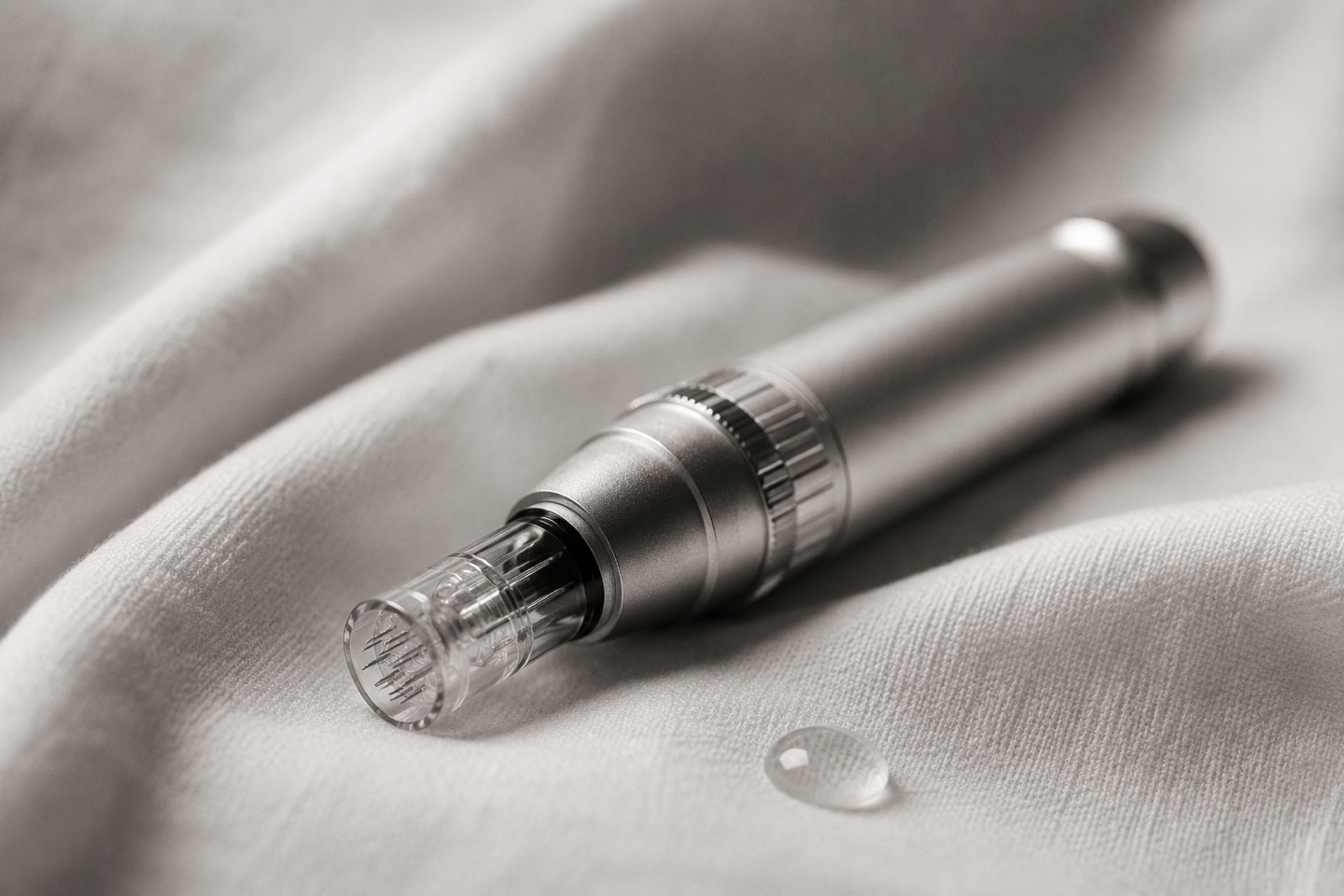
Treatments that encourage the skin's own renewal — radiofrequency microneedling and resurfacing — are designed to improve texture and the look of stretch marks over a series. We'll set honest expectations: meaningful softening, not erasure.
Stretch marks (striae) appear when skin is stretched faster than its deeper structure can keep up — commonly through pregnancy, growth spurts or weight change — leaving fine lines that start red or purple and fade to silvery-white over time.
Fresh, still-coloured marks generally respond more readily, but older, faded ones can also be softened. Treatments that stimulate the skin's own collagen — radiofrequency microneedling and resurfacing — work to improve texture and blend tone over a series.
Because the abdomen, hips, thighs and breasts each behave a little differently, and skin tone guides how we resurface, we assess yours individually and set honest expectations: meaningful softening, never complete erasure.
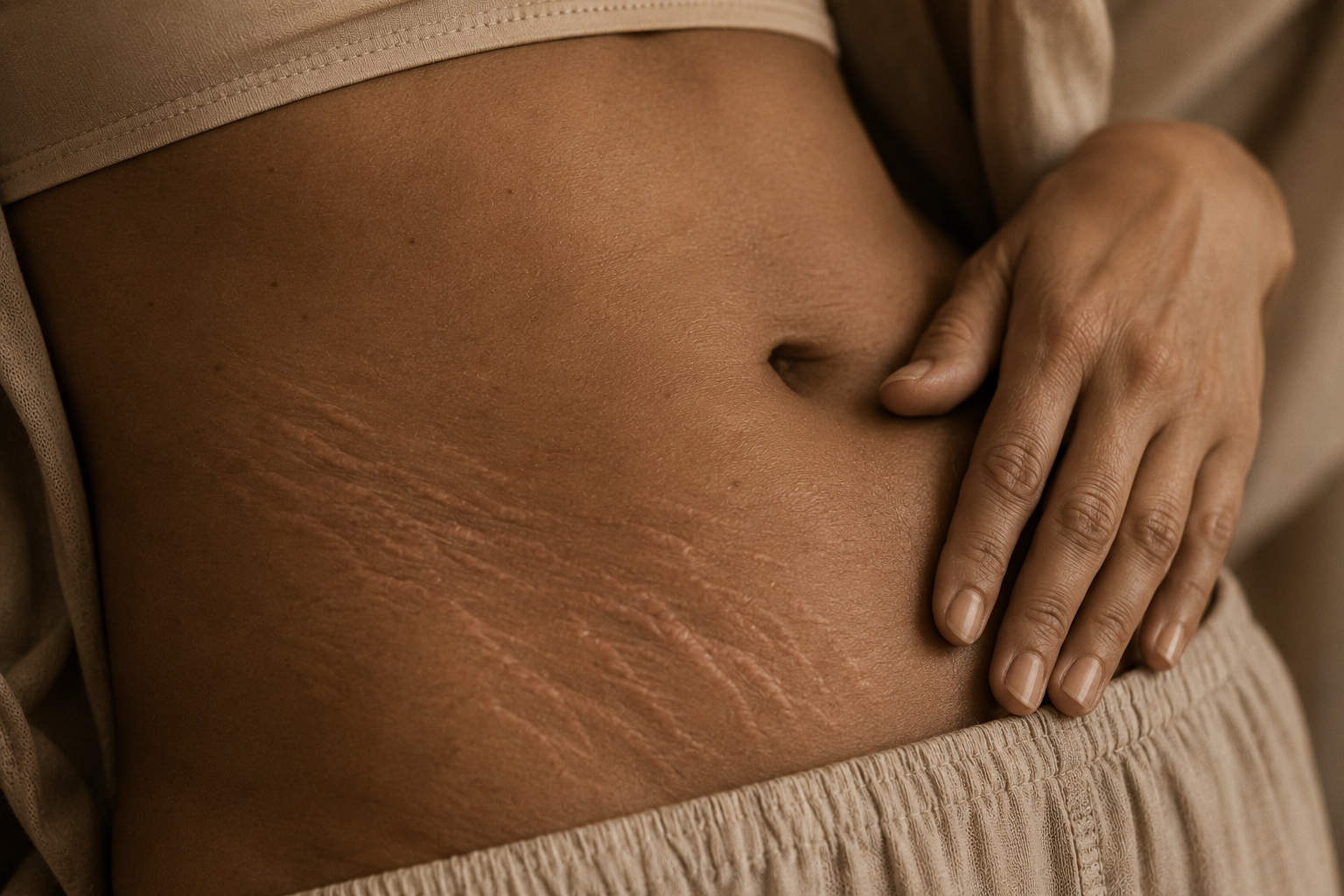
How stretch marks form
They form deep in the skin — which is why creams alone rarely change them, and why treatment works at that deeper level over a course.
Treatments that help
These are common starting points — the right combination for you is confirmed in a complimentary consultation and skin analysis.
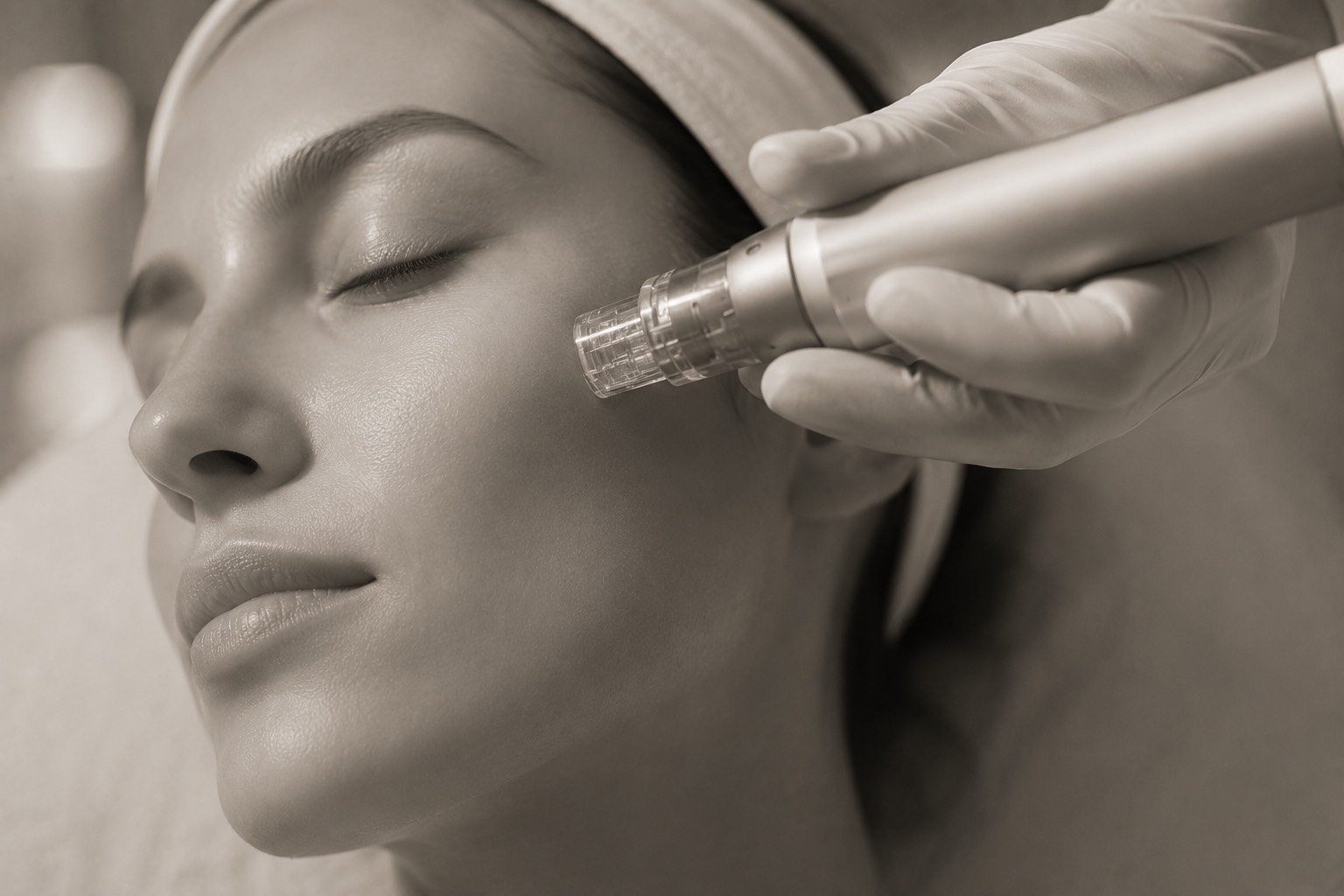

Let's look at it together.
A complimentary, no-pressure consultation and skin analysis is the best way to understand your skin — and what, if anything, is worth doing.
Frequently asked questions
Can stretch marks be removed?
Stretch marks can't be erased entirely, but their appearance — colour and texture — can often be improved over a considered course of skin treatments. We're honest about realistic outcomes.
Do newer or older stretch marks respond differently?
Often, yes — they're approached individually depending on their age, colour and location. We assess yours in person and tailor the plan.
Is treatment suitable after pregnancy?
Many people consider it postnatally, but timing and suitability are individual — we'll check this with you and recommend the right moment to begin.
Do stretch mark treatments hurt?
Comfort measures are used and most people tolerate treatment well; sensation depends on the method and area, which we explain beforehand.
How many sessions will I need?
Stretch marks respond to a series rather than a single session, spaced to let the skin renew between visits. We'll suggest a realistic number for your marks at consultation.
Is it safe on deeper skin tones?
Yes, with the right settings — deeper tones are treated more conservatively to protect against pigment changes. Your skin type is always assessed first.
Understand it deeper
Other concerns